
Quality Assurance (QA) is a critical phase in the software development lifecycle. QA teams ensure that applications are reliable, secure, user-friendly, and meet business requirements. However, despite their importance, QA teams often encounter several challenges that impact productivity and product quality.
Below are some of the most common challenges faced by QA teams and effective ways to overcome them.
Challenge:
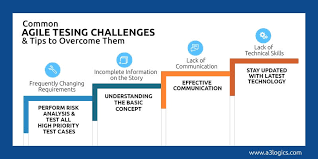
Frequent requirement changes or poorly documented requirements lead to confusion, rework, and missed defects.
Solution:
Involve QA teams early in the requirement analysis phase.
Conduct requirement review meetings.
Maintain proper documentation and version control.
Use Agile methodologies to manage changing requirements efficiently.
Challenge:
QA teams often get limited time for testing due to delayed development or aggressive release schedules.
Solution:
Implement risk-based testing to prioritize critical functionalities.
Automate repetitive test cases.
Integrate continuous testing in CI/CD pipelines.
Collaborate closely with developers to start testing early.
Challenge:
Lack of clear communication between developers, testers, and stakeholders can result in misunderstandings and defects slipping into production.
Solution:
Conduct daily stand-ups and sprint meetings.
Use project management tools like JIRA for transparent tracking.
Maintain clear bug reports with detailed steps and screenshots.
Encourage cross-team collaboration.
Challenge:
Selecting the right tools and maintaining automation scripts can be difficult, especially in rapidly changing applications.
Solution:
Choose automation tools based on project needs and technology stack.
Follow modular and reusable framework design.
Regularly maintain and refactor automation scripts.
Train team members in automation best practices.
Challenge:
Unstable test environments and lack of proper test data can delay testing and produce inconsistent results.
Solution:
Maintain dedicated and stable test environments.
Use test data management tools.
Implement environment monitoring and configuration management.
Challenge:
Modern applications involve multiple integrations, APIs, cloud services, and microservices, making testing more complex.
Solution:
Perform integration and API testing thoroughly.
Use performance and security testing tools.
Adopt shift-left testing to detect issues early.
Implement end-to-end test strategies.
QA teams are essential to delivering high-quality software products. While they face challenges such as evolving requirements, time constraints, automation complexity, and communication gaps, these issues can be effectively managed with proper planning, collaboration, and the right tools.
By adopting Agile practices, automation strategies, continuous integration, and proactive communication, QA teams can significantly improve efficiency, reduce defects, and ensure successful product releases.








Share This News